
Is there a formula for good communication? We believe it comes down to two things: quality and continuity. Communicate consistently at a high level over time, and it will have an effect. Quality, in turn, comes from a combination of understanding, skill, and experience – with close attention to detail. Details matter because people notice them. And consciously or not, they often judge the whole by the quality of its parts.
Sometimes the most pressing challenge is attracting exceptional people. Sometimes a financing round is approaching or a new product is about to be launched. More generally, companies may need greater visibility – but visibility among the right people, not simply more of it. And occasionally, a difficult situation needs to be brought under control before it develops into something worse.
Often, several of these challenges arise at the same time. We develop the strategy, language, and content to address them.

Before we decide what to say, we need to know what matters. Our strategy workshops bring together people who know the company from different perspectives: founders and management, scientists and engineers, sales teams and, where useful, people who have only recently joined. We provide the structure – one that experience has shown will lead to a tangible result – and keep the process on schedule so that this result is reached in time. The substance, however, comes from the people around the table. Our role is to moderate the discussion, make sure every perspective is heard and ask straightforward questions.
What does this company do better than others? What client need does the new technology address? Who needs to understand this? And what might prevent them from doing so?
The answers are not always obvious. Scientists may focus on particular aspects of the technology; prospective customers want to see the immediate benefit. Investors look for a convincing business model. Potential employees want to know whether the science is sound, the ambitions are credible and whether these are people they would like to work with. Our task is to find the common ground without reducing everything to the lowest common denominator. From there, we define the positioning, key messages, language and visual principles that give the communication a clear direction. They become the foundation for everything that follows.

Some of the most valuable knowledge in a company never leaves the minds of the people who created it. We work with founders, scientists and executives to bring that knowledge to the audiences who will value it. This is not ghostwriting in the sense of putting polished generalities into someone else’s mouth. Our contributions have substance because we question, structure and edit until the argument is clear – while preserving the thinking and the voice of the person behind it. The objective is not visibility for its own sake. Consistently good ideas, expressed clearly over time, create something more valuable: authority.
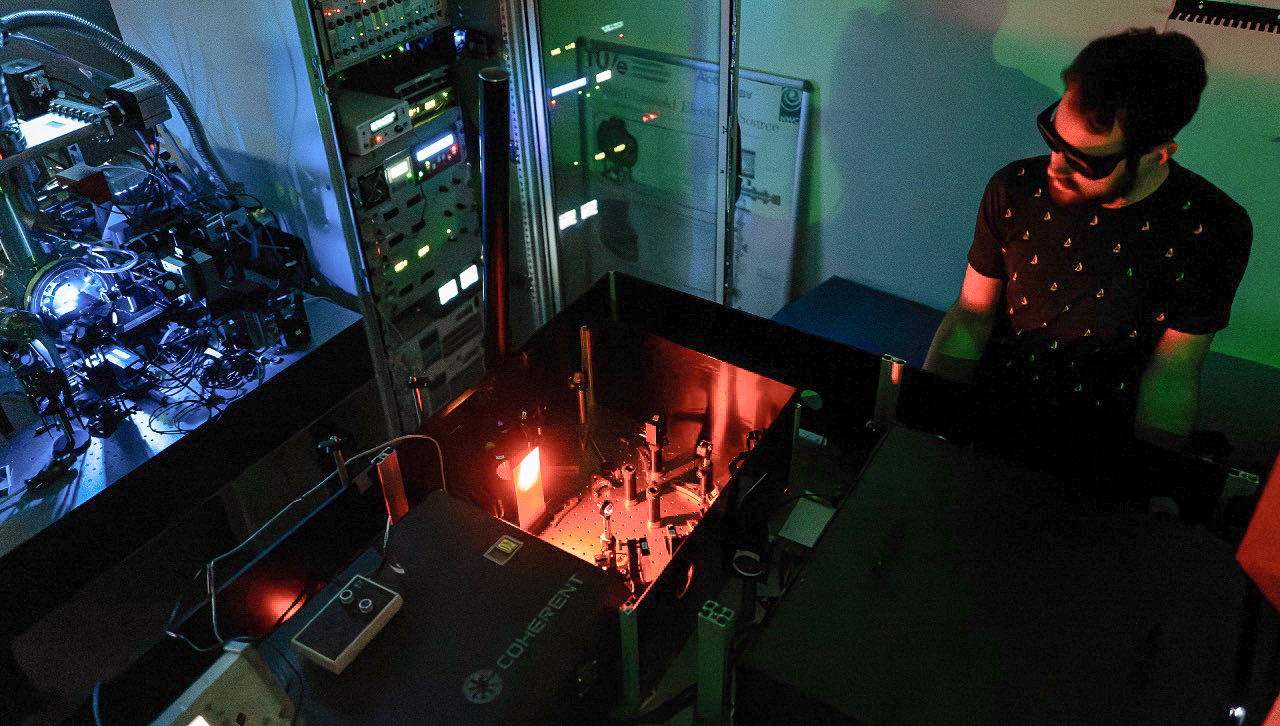
Once the positioning is clear, it needs to come to life through content. Whatever the novelty or complexity of your technology, a visitor to your website should understand within seconds what makes it valuable.
Recruitment adds another dimension. Facts alone rarely make someone want to join a company. People also need to get a sense of the place, the work and the people they would be working with. This is where images become particularly powerful. Photography and film can reveal things that words would struggle to describe. We choose the form according to what needs to be communicated – not the other way round.
Much of the raw material comes directly from the people doing the work. We interview them, follow them into laboratories, workshops and field sites, and look for the details that make a story specific rather than interchangeable.
Then we edit. Good content is not everything we have learned about a subject. It is what the reader needs in order to understand it.
Having a good story is not enough. You also need to get the right journalist interested in it at the right time.
Editorial timing is one of the most important aspects of media relations. A feature writer may need several months to find the right place for a story in the editorial calendar. A news agency, by contrast, may want the material only a few days before an embargo lifts. Understanding these rhythms determines when we approach whom – and what we offer them.
Our communication plans combine different forms of exposure, each with a particular role. An exclusive story can establish credibility and depth from the outset. Wider media coverage and social media then broaden the reach. Interviews, background information, images and other material are added where they can strengthen the story. Everything is carefully sequenced rather than simply released at once.
After 25 years of working with journalists, we also know that good media relations are reciprocal. Journalists remember sources who understand their work, provide reliable information, meet deadlines – and do not waste their time.
From a communications perspective, a crisis is a period of unusually intense attention. Handled well, that attention can sometimes even be turned in a positive direction. More often, however, the objective is simply to restore normality as quickly as possible.
Crisis management is therefore usually about de-escalation. And de-escalation begins with avoiding mistakes that make the situation worse. There may be no formula for handling a crisis successfully, but there are many ways to prolong one.
The work behind the scenes is rarely glamorous. It means establishing the facts, understanding the causes, anticipating reactions, preparing different scenarios and coordinating everyone involved – often late into the night. When decisions have to be made quickly and under pressure, there is no substitute for experience.
Over the past 25 years, we have helped organizations navigate numerous crises and highly sensitive situations. Our work has included communication surrounding the Swissair trials, one of the most closely watched corporate cases in recent Swiss history. For many years, we also taught crisis communication seminars, turning experience from real cases into a systematic approach to what works – and, just as importantly, what can go wrong.

Our work has received numerous international awards, including two International German PR Awards. We were the first Swiss agency to receive this distinction.
